
Tag Archive for: housing prices

The Best Selling Time in BC

The Best Selling Time in BC: Seller’s Market vs. Buyer’s Market Explained

Seasonal Market Insights for Victoria Property Sellers 

When determining the optimal selling time for your Victoria property, understanding whether you’re in a seller’s market or buyer’s market is crucial for maximizing your return on investment. As experienced property appraisers serving homeowners across Greater Victoria, southern Vancouver Island, D. Fritz Appraisals Inc. monitors how local market conditions strongly influence timing strategies and sale outcomes throughout the year.

Key Takeaways

  • Spring remains an important season for listings, but strength is less uniform. Pricing and positioning now matter as much as timing.
  • Fall 2025 is emerging as a key secondary window for sellers looking to capture motivated buyers returning after the summer.
  • Inventory levels are higher, and the market is more balanced; not every listing will receive multiple offers.
  • Winter markets favour serious buyers shopping for homes in Victoria’s mild climate. Fewer competing buyers create advantageous conditions.
  • A professional appraisal ensures optimal pricing, regardless of seasonal market conditions or the time of sale.
  • Local market dynamics matter more than general trends. Each Victoria neighbourhood has its own unique pattern.
  • Successful selling requires strategic timing that takes advantage of current market conditions.

Victoria’s Seasonal Real Estate Market Dynamics

Victoria’s real estate market follows seasonal rhythms, although they are less pronounced than in other parts of Canada due to the region’s mild climate. Understanding these cycles helps homeowners determine whether conditions favour a seller’s market or a buyer’s market scenario.

During the spring months, increased listings and buyer activity typically create seller’s market conditions. Properties receive more attention, often resulting in competitive offers. However, this active selling time also means more homes compete for buyer attention.

Regardless of the time of year, a professional appraisal is essential to maximize your sale. An accurate property valuation ensures your home is competitively priced, whether you’re navigating a seller’s market or a buyer’s market. Without proper market analysis, sellers risk missing opportunities in favourable conditions or overpricing when market dynamics shift.

Victoria’s mild climate keeps the real estate market active year-round, unlike other regions where winter creates dramatic slowdowns. This consistent activity means strategic sellers can find success at any time with proper positioning and pricing.

Spring: Selling Time Advantages

In early  2025, steady momentum created a seller’s market. From March to April 2025, a 4.7% increase in homes sold during this period indicates consistent, strong year-over-year performance. While spring is still an active selling season in Victoria, strong buyer demand has carried through the summer and into fall, signalling a more balanced and resilient market overall. 

High activity during the peak season creates classic seller’s market dynamics. Increased demand combined with a large inventory gives buyers more choices while maintaining competitive conditions for well-positioned properties. Sellers in desirable neighbourhoods continue to sell well despite increased competition.

A few of the contributing factors that can support a seller’s market in Greater Victoria include:

  • Longer daylight hours
  • Improved weather
  • Garden in bloom
  • Outdoor spaces shine
  • Increased curb appeal

In competitive markets, such as the spring selling season, a professional appraisal is essential. While buyer interest peaks, competition from other listings also intensifies. An accurate valuation ensures your property stands out in a seller’s market by being priced strategically rather than aspirationally.

Summer and Fall Market Opportunities

Victoria’s summer real estate market remains robust, defying the typical seasonal slowdowns seen elsewhere. June and July 2025 both recorded higher sales than the same months in 2024, demonstrating continued strength.

The summer selling season benefits from family buyers who prefer settling before school starts, as well as buyers looking to purchase vacation properties. These factors help maintain seller’s market characteristics even when other regions experience buyer’s market shifts during the summer.

Fall represents an excellent secondary time to sell in Victoria’s market. After summer, buyers often return with renewed focus and clear timelines. Historically, September has seen higher sales than August, and in 2025, this trend is expected to continue. The market is gaining strength as inventory stabilizes and demand remains steady. Rather than a single “spring rush,” this year has brought more consistent activity across seasons. With fewer new listings and motivated buyers still active, fall often creates favourable, localized seller’s market conditions despite broader signs of balance in the region.

Winter Market Considerations

Victoria’s mild climate distinguishes its winter selling season from other Canadian markets, where activity virtually comes to a halt. While transaction volumes decrease compared to peak seasons, serious buyer activity continues throughout the winter months.

December through February generally feature fewer listings, creating natural scarcity that can maintain seller’s market dynamics for appropriately priced properties. Reduced competition means well-positioned homes often attract disproportionate buyer attention during this selling time.

Buyers who are active during the winter demonstrate genuine motivation and readiness to complete purchases. These serious purchasers often move quickly, creating opportunities for sellers who understand how to leverage winter’s unique market conditions.

Professional appraisals become particularly valuable during the winter selling season. With fewer comparable sales and unique seasonal factors, accurate pricing ensures sellers remain competitive. 

Strategic Timing for Maximum Returns

Choosing your optimal selling time in Victoria requires balancing seasonal market patterns with personal circumstances. Understanding when seller’s market versus buyer’s market conditions typically emerge helps determine when to sell.

A professional appraisal provides you with the information you need to customize a plan that optimizes sales, regardless of the chosen selling time. Understanding current property values, recent comparable sales, and neighbourhood-specific trends are factors that will ensure your home is well-positioned to sell.

Frequently Asked Questions

  • How Does An Appraisal Differ From A Real Estate Agent’s Market Evaluation?

An appraisal is a formal, unbiased valuation conducted by a licensed appraiser and often recognized by lenders, courts, and financial institutions. A real estate agent’s evaluation is typically a marketing tool to help set a listing price. Both have value, but an appraisal provides a more detailed and defensible report.

  • Can An Appraisal Help If I’m Not Planning To Sell Right Away?

Yes. Many homeowners order appraisals for financial planning, refinancing, estate considerations, or to understand equity growth. Having a professional valuation before you’re ready to sell ensures you’re prepared when the timing is right.

  • Do Appraisals Consider Home Improvements Or Renovations?

Absolutely. A licensed appraiser will assess recent upgrades, renovations, and the overall condition of your property compared to similar homes in the area. This helps ensure that improvements are reflected in your market value.

  • How Often Should I Get My Property Appraised?

There’s no strict rule, but many homeowners choose to update their appraisal every 2–3 years, or sooner if there have been major changes in the market or significant renovations to the property.

Partner with Local Appraisal Experts To Maximize Selling Time

We’re here to help you time your home’s sale strategically and price it competitively. Our reports help homeowners understand local market dynamics to position their properties effectively.

Our appraisers are certified by the Appraisal Institute of Canada (AIC) and professionally insured for liability, in accordance with the Canadian Uniform Standards of Professional Appraisal Practice (CUSPAP). Contact us today to get started.


First-Time Homebuyers with GST Relief

GST Relief: What First-Time Home Buyers in BC Need to Know

Navigating the Requirements for GST Tax Relief

In British Columbia’s competitive housing market, GST relief provides the helping hand First-Time Home Buyers (FTHB) need to reduce the overall cost of purchasing a newly constructed home. If you’re shopping for your first home, the federal government is eliminating the GST on properties worth $1 million or less and reducing GST on homes between $1 million and $1.5 million. 

As a result, FTHBs will see savings of up to $50,000. This tax break may seem straightforward on the surface, but there are important details about who qualifies and how to apply that can significantly impact your chances of success.

Getting all the details right is crucial. Incomplete documentation could mean losing out on this valuable benefit. That’s why many buyers turn to local experts like D Fritz Appraisals to get accurate property valuations and guidance through the process, helping ensure you maximize your GST tax relief.


Key Takeaways

  • First-time buyers in BC can save up to $50,000 in GST on new homes.
  • GST is eliminated on homes under $1M; partial rebates for homes between $1M–$1.5M.
  • To qualify, you must be a first-time buyer, a Canadian citizen or permanent resident, and use the home as your primary residence.
  • Builder-purchased, owner-built and shares in co-operative housing are eligible, with different requirements.
  • Homes must be purchased or construction started on or after May 27, 2025, and before 2031.
  • This rebate is a one-time opportunity, so timing and documentation are key.

Breaking Down First-Time Home Buyer GST Savings

Three key parts shape the FTHB GST Rebate: your savings amount, property value limits, and timing rules.

Through Canada’s federal GST relief program, you’ll save up to $50,000 in GST when buying a new home worth $1 million or less. For homes priced between $1 million and $1.5 million, you’ll receive a smaller rebate that gradually decreases.

  • To be eligible, you must sign your purchase agreement on or after May 27, 2025, and before 2031.
  • The GST savings apply to both new builder-sold and owner-built homes, provided construction commences before 2031 and is mainly completed by 2036.
  • Please note that this rebate is only available once in a lifetime and must be used as your primary residence.

Key Eligibility Requirements for GST Relief for BC Residents

To qualify for the federal GST relief program, you need to meet several key requirements. These rules ensure the rebate benefits genuine first-time homebuyers and maintain the program’s smooth operation. Review these important qualifications before you apply:

  • You must be 18 or older and either a Canadian citizen or a permanent resident
  • You can’t have owned a home, nor lived in a home owned by yourself or your spouse/common-law partner, in the calendar year of purchase or in the four preceding years (in or outside Canada)
  • Your new home must cost less than $1.5 million 
  • You need to live in the property as your main home
  • If you’re married or have a common-law partner, they can’t have claimed the rebate before

Combined with the existing GST/HST New Housing Rebate, the FTHB GST Rebate provides full GST money back on homes valued up to $1 million, with smaller rebates for homes priced between $1 million and $1.5 million.

Maximizing Your GST Relief Savings on New Construction

Smart planning can maximize your GST relief benefits when building or buying new construction in BC.

To receive the full GST rebate of up to $50,000, your new home’s value needs to stay under $1 million. You might still qualify for a partial rebate if you’re looking at a property between $1 million and $1.5 million.

If you’re an owner-builder, timing your construction is crucial. Start building between May 27, 2025, and before 2031, and ensure substantial completion by 2036.

Keep thorough records of all GST paid on materials and labour. Since you can only claim this rebate once in your lifetime, it’s important to make the most of it.

When working with a builder, ensure your purchase agreement falls within the eligible dates and follows all program requirements.

Owner-Built Homes vs. Builder-Purchased Properties

First-time homebuyers in BC have a tough decision to make: whether to buy from a builder or build their own home. Both choices offer valuable GST tax relief of up to $50,000, but they follow different rules and have unique advantages.

For builder-purchased homes:

  • Need a purchase agreement between May 27, 2025, and 2031
  • The builder must finish the majority of construction by 2036
  • You must be the first person to live in the home
  • The builder takes care of most construction details
  • Less hassle with paperwork and coordination

For owner-built homes:

  • Must begin construction between May 27, 2025, and 2031
  • Need to meet specific completion deadlines
  • You must be the first person to live in the home
  • You get more control over design and customization

The builder-purchased route offers a more straightforward path, while owner-built homes give you more freedom to create exactly what you want. This spec vs custom home article does a good job of explaining the difference. 

Your choice may depend on how much time and effort you’re willing to invest in the building process.

Getting an independent appraisal of your property’s value is crucial for making informed decisions about asset division and future property investments.

Frequently Asked Questions

  • Can I Combine the FTHB GST Rebate With Other Provincial First-Time Buyer Incentives?

Yes, you can combine the FTHB GST rebate with other provincial first-time buyer programs. The rebate is designed to work alongside existing incentives, maximizing your savings when you purchase your first home.

  • What Happens if My Marital Status Changes During the Rebate Application Process?

If your marital status changes (for example, you get married or become common-law) while applying for the GST relief, you must disclose your spouse’s or partner’s homeownership history. To remain eligible, neither you nor your spouse/common-law partner can have owned a home, or lived in a home owned by either of you, in the year of purchase or in the previous four calendar years. 

  • How Long Does It Typically Take to Receive the Rebate After Applying?

Processing times for the FTHB GST rebate typically range from four to six weeks after sending in your completed paperwork. Please note that if you’re missing any documents or if your application requires additional review, the wait time may be longer than average.

A Smart Step Toward Affordable Homeownership

Whether you’re buying from a builder or planning to build your first home yourself, navigating the GST relief process with confidence starts with understanding your property’s true value.

At D. Fritz Appraisals, we help first-time buyers across BC with accurate, timely valuations that support rebate eligibility and informed decision-making. Our appraisers are certified with the Appraisal Institute of Canada (AIC) and professionally insured for liability according to the Canadian Uniform Standards of Professional Appraisal Practice (CUSPAP). 

Have questions or need an appraisal as part of your tax relief planning? Contact us today to get started.

first-time homebuyers BC

Why Are First-Time Homebuyers Struggling in BC?

How to Break Into the BC Housing Market

Breaking into the real estate market in British Columbia is not easy. With soaring prices, stiff competition, and constantly shifting market conditions, maximizing first-time homebuyers’ purchasing power has become critically important. At D. Fritz Appraisals Inc. we strive to make the process of purchasing or selling a home less stressful for our clients by providing timely and accurate appraisals that can assist with making sound real estate decisions.

Come along as we discuss the challenges facing first-time homebuyers in BC and learn some effective strategies that can help in the journey toward home ownership. 

Victoria BC is a Tough Real Estate Market

As of July 2024, the British Columbia Real Estate Association indicates that a first-time homebuyer in BC will pay upwards of $950K. High prices combined with increased borrowing costs, have left many homebuyers delaying the purchase of their dream homes. It’s become commonplace for homebuyers to seek lower-cost alternatives such as moving away from major centers to more affordable communities or partnering with a friend or family member to purchase a house.

Though housing costs, monthly rentals, and property taxes are on the rise, solutions to housing insecurity may be just around the corner. While new government initiatives aim to decrease barriers to the housing market rollout, here are a few strategies first-time homebuyers are adopting to secure a home in Victoria BC, one of the most desirable places to live in the world.

Who Are The Average First-Time Homebuyers In BC?

It might come as a surprise to you to learn that first-time buyers in BC are getting older. Though people buying a home for the first time are made up of a diverse group of young professionals and families looking to settle down, the age range spans mainly the late 20s to early 40s. With the increase in purchase prices, it’s taking first-time buyers longer to save and young people are living with their parents longer.

Considerations Before Making An Offer 

Get Your Credit Score Up

It might not be what a first-time homebuyer wants to hear, but delaying the purchase of your first home might be the option that makes the most sense. Instead of going further into debt with a home purchase, focus on paying down any outstanding loans you might have and improving your credit score. A healthy credit score will make you more attractive to lenders.

Get Pre-Approved

It’s also important to get pre-approved for a mortgage before you start shopping around. Having less debt and a good credit score improves your chances of getting an appropriate mortgage to purchase a home. Knowing which homes are within your grasp helps significantly in the home search and also prevents the disappointment of touring homes that end up being out of your budget. 

Tax Incentives

In addition to saving and getting pre-approved for a mortgage, there are several tax incentives that first-time homebuyers may qualify for to stretch their purchasing dollars. Though the Canadian Mortgage and Housing Corporation (CMHC) has discontinued its first-time homebuyer’s incentive as of March 31, 2024, there are a number of other tax breaks that could help ease your monthly mortgage payments. 

To qualify for any of these incentives, administered through the Canada Revenue Agency (CRA), you must first file an income tax return.

  • First Home Savings Account (FHSA) – a registered plan that allows potential homebuyers to save, buy, or build a qualifying home tax-free (limits apply)
  • Homebuyers’ Plan (HBP) – allows withdrawals of up to $60K from an RRSP to buy or build a home. If the withdrawal is paid back into the RRSP within the required timeframe, it’s tax-free
  • First-Time Homebuyer’s Tax Credit (HBTC) – a tax credit of up to $1500 for eligible homebuyers
  • GST/HST New Housing Rebate – a rebate for individuals who have bought a new home or used a builder to substantially renovate their house, condo, duplex, mobile home, or floating home

Getting advice from a professional property appraiser like D. Fritz Appraisals Inc. before you purchase is an excellent idea. Professional property appraisers will let you know the home’s true value compared to the asking price and how it might change over time.

Thinking Outside The Box

A growing trend among first-time homebuyers is the increasing reliance on financial help from family and provincial and federal government programs to come up with the large down payments required. Co-owning properties with someone other than a spouse or significant other is one-way first-time homebuyers are breaking into the market. According to Royal LePage Real Estate Service, 6% of the 500 respondents surveyed co-owned their home and 41% have borrowed money from family.

In addition to cohabitation, and seeking help from the Bank of Mom and Dad, first-time homebuyers today have had to get more creative. Here are a few unusual strategies eager buyers are employing to break into the housing market:

  • Home Hacking – purchasing a multi-unit property, living in one unit, and renting out the remainder to cover the cost of the mortgage payment
  • Crowdfunding – do you have a large social media following? Then a crowdfunding platform to raise money for a down payment might be the answer.
  • Alternative Financing – seller financing, where the seller acts as the lender may be an option for buyers who don’t qualify for traditional mortgages.

While unconventional, these approaches might be just the extra help you need to get your foothold into the competitive housing market here in Victoria BC.

What Does the Future Hold?

In British Columbia, the changes to zoning laws for multi-family projects will increase the number of high-density developments. These changes should reduce the barriers to entry for first-time homebuyers and middle-income earners. For a deeper look, read our recent blog on Missing Middle, Affordable Housing.

Stronger BC, as part of the BC Homes For People Action plan, has committed $12 billion (2023 budget) over ten years to minimize the strain on homebuyers. See how your tax dollars are being spent here for a more detailed look.

Trust D. Fritz Appraisals Inc. For Fast And Accurate Mortgage Appraisals

When buying a home for the first time, one of the best ways to ensure you have prepared the winning offer is to consult with a real estate appraiser. D. Fritz Appraisals Inc. works with first-time homebuyers to provide the highest level of residential appraisal service on Southern and Central Vancouver Island. Our mortgage financing appraisals let you know the fair market value of the property you’re interested in purchasing. 

With turnaround times often coming in within 24 hours, our quick and comprehensive home appraisal reports will give your offer a competitive edge. To find out more about our mortgage appraisal services contact us online or give us a call at (250) 413-7319.

bc housing crisis

The BC Housing Crisis: What’s Being Done To Help?

How Are Your $12 Billion Tax Dollars Being Spent?

The BC housing crisis is top of mind for anyone struggling to enter the housing market, find a rental, or hold onto their current home during these difficult economic times. Home prices, rental rates, and property taxes continue to rise, and with those skyrocketing costs comes housing insecurity. At D. Fritz Appraisals, we understand that finding an affordable home to call your own in desirable British Columbia has become a significant challenge. 

A 2023 Leger poll found that 68% of British Columbians are concerned that they won’t be able to pay their mortgage or rent, and another 93% agree that increasing rental prices have become a serious problem. 

While the BC housing crisis is hurting British Columbians, the provincial government is attempting to facilitate faster home construction and increase the number of rental properties through several initiatives. 

Read on to learn how Stronger BC has made strides to deliver homes for people more effectively.

Stronger BC

As part of the BC housing action plan, the province has committed $12 billion (2023 budget) over the next 10 years to improve the housing market in BC. 

A few of the steps the Homes For People Action Plan has taken include:

  • Fixing outdated zoning rules
  • Locating homes next to amenities such as transit
  • Fast-tracking approvals
  • Managing speculators
  • Maximizing rentals by reducing vacancy rates
  • Shifting short-term rentals to long-term rentals

1. Zoning Changes

Zoning changes are making a difference to the BC housing crisis. Here are just a few of those changes:

  • Adding a second, third, or fourth unit to your home is becoming easier. New rules and standardized designs are helping home builders speed up the construction of small-scale multi-unit housing.
  • A Secondary Suite Incentive Program (SSIP) allows qualifying homeowners to borrow up to $40,000 in the form of a forgivable loan to help with the cost of adding a rental suite to their home. 
  • Changes to the Strata Property Act will allow children to live in many homes with previous age restrictions. Fifty-five plus stratas will remain unchanged. Condo owners belonging to stratas can now rent out their vacant units as long-term rentals.

By removing zoning barriers and building more small-scale multi-unit housing, people who have been priced out of the competitive market will have a more affordable entry point. 

2. Affordable New Construction

Efforts are being made to make housing in BC affordable for everyone. The provincial government has a few strategies in place to tackle escalating house prices.

  • Programs such as BC Builds have partnered with local governments, First Nations, and non-profit organizations to develop housing for middle-income households. BC Builds leverages public, community, and non-profit-owned land to speed up development and lower construction costs. 
  • Changes to rules and regulations will allow more homes to be built near rapid transit stations like the SkyTrain
  • Over 12,000 beds will be added to schools across BC for students living away from home
  • Municipalities will have housing targets to meet to keep up with projected growth

Along with these improvements, steps are being taken to assist BC’s most vulnerable,  including rent banks for people in temporary financial crises, supportive housing for those experiencing homelessness, and more complex care housing.

Want to take a deeper dive into middle-income housing? Check out our previous blog, Is Missing Middle Housing The Answer to Victoria’s Housing Shortage?

3. Fast Tracking Approvals

A Building Permit Hub has been created to automate parts of the application process. Applications will be checked to ensure they meet the BC Building Code and Energy Step Code, minimizing delays. With online permitting, permit review and approval will be easier and faster.

In addition to the Building Permit Hub, an application portal for natural resource permits has been created. The BC Housing Taskforce will work across ministries to guide the natural resource permitting process.

The single housing application service includes permits issued by:

  • Ministry of Environment and Climate Change Strategy
  • Ministry of Forests
  • Ministry of Transportation and Infrastructure
  • Ministry of Water, Land and Resource Stewardship

Along with over forty new staff, a Housing Navigator Service is in place to assist with questions and provide guidance.

4. Minimizing Speculators

The Speculation and Vacancy Tax (SVT) aims to turn unoccupied rentals into long-term rentals in communities with the most significant housing shortages. Residential property owners will be required to declare for the first time starting in 2025. The province has provided this interactive map to help you determine if your community is in the taxable area.

In addition to the SVT, the BC Home Flipping Tax, effective January 1, 2025, is expected to discourage investors. This tax applies to homeowners who sell a residential property less than two years after purchasing. Proceeds from the Home Flipping Tax will be used to build affordable housing.

Besides the above taxes, the Foreign Buyers Tax has been increased to 20% and expanded to include more communities. 

All these changes combined hope to deter and penalize speculators.

5. Protecting Renters

Houses to rent in British Columbia are becoming fewer and further between. The province has recognized that the low vacancy rate for rentals has caused rents to soar. To help mitigate the increased costs, renters with an adjusted income of $60,000 or less can claim a renter’s tax credit of up to $400/year.

More help for renters is coming. The Short-Term Rental Accommodations Act provides governments with stronger enforcement rules to restrict short-term rentals to principal residences, increasing long-term rental availability.

To further protect renters, rental rates have been capped at 3.5%, below the inflation rate, to improve affordability.

For Expert, Detailed, and Trustworthy Valuations, Trust D. Fritz Appraisals

The current BC housing crisis may be just the impetus you need to add a secondary suite or a small-scale multi-unit to your property. Perhaps you’re interested in taking advantage of the Secondary Suite Incentive Program. Look no further than D. Fritz Appraisals Inc

Let us appraise your new construction or renovation to ensure your lender financing is approved. Our certified real estate appraisers provide accurate property value appraisals for homes at all stages of construction.

Serving Victoria to Nanaimo and the Gulf Islands, our expert team is approved by most banks, credit unions and private lenders. Contact D. Fritz Appraisals Inc. today, and we can tailor an appraisal report to meet your lending, selling, and appraising needs.

victoria bc missing middle housing

Missing Middle Housing in Victoria, BC

Victoria’s Missing Middle Housing Initiative

 As Canada’s housing market continues to hit record levels, young Victoria families are facing the decision to stay in condominiums and apartments or move elsewhere to be able to purchase a single-family home or townhouse with yard space.

The Victoria Real Estate Board now reports that the average price of a detached house in Victoria is over $1 million. The average price for a townhouse is about $750,000.

“None of my peers can afford to buy a house here, most will leave Victoria when they no longer wish to sacrifice their money to their landlords and would prefer to buy.” – Missing Middle Housing Survey Respondent.

At a time when housing prices and rental rates are the highest they’ve been in decades, being able to own a home with a yard has become a pipe dream for many British Columbian families.

Many Victorians pointed out that technically there are units in the city that they could afford, but that most units within financial reach are far too small for their families, with no access to a yard, and no pets allowed, so they are not able to live a full life.

It’s not just families either, it’s students and seniors who are finding themselves priced out of the market for a good, safe home.

What is Missing Middle Housing?

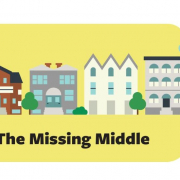
Missing middle housing is designed to address families and individuals who are being pushed out of the market for a single-family home. Missing middle housing types include townhouses, duplexes, triplexes and fourplexes. These three to four-storey units are meant to help diversify housing and provide options that extend beyond detached single-family homes or apartments.

What is the Missing Middle Housing Initiative?

The City’s of Victoria’s Strategic Plan (2020-2022) included an action in 2020 to consider a comprehensive amendment to the Zoning Bylaw to permit all “Missing Middle” housing forms as of right without the need for rezoning or development permit. 

This would make it much simpler for developers to create low-rise multi-family housing developments as infill in existing neighbourhoods. 

Also, rather than demolishing heritage homes to make room for Missing Middle homes, developers would be permitted to build developments designed for slightly higher (gentle) density housing. 

This protects heritage homes and potential heritage homes, while also breathing new life into the surrounding neighbourhood with the goal of increasing liveability, affordability, walkability and accessibility to amenities.

In addition, shared and private green space would be prioritized. In other words, the goal would be to create this gentle density while preserving the integrity and characteristics of the neighbourhood.

Where Can Missing Middle Housing Be Built?

The City of Victoria’s Missing Middle Housing Initiative is proposing that these townhomes and “plex” homes be built amongst existing detached housing in established neighbourhoods. The goal is to create ground-oriented housing that can increase housing choices, affordability for those housing choices, walkability scores and overall sustainability. In short, a home that is affordable for the average family, which cuts down on the need to use a vehicle to get around, with plenty of green space and shared garden/yard space.

“We need to allow flexibility with missing middle — and high gentle density, without requiring parking. If we continue to build for cars, we’ll continue to foster car culture. If we build for families, nature and neighbourhoods, we will foster community.” – Survey Respondent

What has Been Done So Far to Encourage Missing Middle Housing?

Victoria’s Housing Strategy is working to provide solutions by widely engaging members of the public from neighbourhoods all around Victoria and the Capitol region. Between March 2020 and May of 2021, the city of Victoria requested feedback via meetings, surveys, workshops and virtual engagement.

The feedback requested has focused on everything from housing preferences to barriers preventing families and individuals from being able to move from a condo or apartment to a single-family home or house plex.

Some of the main findings in the discussions and surveys;

  1. Parking – Parking space and access to outdoor space were cited as two key reasons for residents wanting a family home or house plex. Proximity to public transportation options was also a key point.
  2. Housing Affordability – One of the highlights from the initial findings was “prioritizing affordability over luxury design” suggesting that potential owners much prefer the indoor and outdoor living space to fancy finishings and custom features. One respondent said: “Housing should be affordable first, accessible second and life improving third.” 
  3. Rental Options – Another needed solution is the increase in rental housing for seniors and students. Survey respondents suggested that one, two and three-bedroom homes in Missing Middle Housing be prioritized for these groups who are currently struggling to find suitable housing. This could create a spectrum of affordability for both owners and renters.
  4. Sensitivity to Different Lot Sizes and Variety of Housing – Allow for flexibility to create attached dwelling units, garden suites, secondary suites, townhouses, house plexes and more, with different combinations on the same lot.
  5. Space for Growing Families – As more people work from home during the COVID-19 pandemic, there is also a demand for slightly larger units so that families can have home offices. A few respondents mentioned the difficulty in living in small suites since the pandemic started. As one respondent candidly put it, “Families can’t love in micro spaces!”

What Are Some Main Concerns About Missing Middle Housing?

Along with positive feedback and an eagerness to move forward with this initiative, residents have also expressed concerns, such as:

  1. Viability – This type of more affordable housing may not be viable for builders and developers. Larger apartment and condominium developments are much more financially sound developments, by sheer volume alone.
  2. Crowding – May create too much density in primarily single-family neighbourhoods.
  3. Widespread changes – Some feel that this type of development could alter streetscapes, reduce the feel of a quiet residential community, reduce green space and result in the loss of tree canopies.
  4. Urgency – In this housing crisis, housing is needed now. Feedback from Victoria residents indicates that renters need access to affordable housing right now, not in five years. The sooner gaps in housing choice and affordability can be addressed, the better. There is also a real urgency for families and residents who feel there is no financially achievable housing option for them within the city, even with well-paying jobs and savings.
  5. NIMBYism (Not In My Back Yard) – Residents may oppose any additional development in their existing neighbourhood. Some residents have expressed worries that multi-unit housing types will bring in more renters, more commercial buildings (shops, restaurants, etc.…) and drastically change their quiet residential neighbourhood.

Missing Middle Housing is an Ongoing Debate

With so many pros and cons attached to the Missing Middle Housing Initiative, it’s no wonder that responses are so split. 

As pricing in and around Victoria, BC continues to rise with no real end in sight, the City of Victoria is pushing ahead with gathering as much feedback as possible and working to educate existing homeowners on the merits of this gentle density housing strategy. 

Educate yourself and have your say in the virtual open house today. Take the Phase Two survey, watch the video below and explore all the feedback from Victoria residents to learn more.

YouTube video

Thinking about a move and wondering what your home is worth in the current marketplace? With over 40 years of experience, our team is approved for most banks, credit unions and private lenders. We provide professional real estate appraisals from our home base in Victoria all the way to Nanaimo and the Gulf Islands. Contact us at D. Fritz Appraisals in Victoria BC today to request your real estate appraisal.

canadian housing prices to decrease in 2022

Housing Prices are Forecast to Decrease 20% Next Year

According to Industry Experts, Housing Prices May Fall in 2022


There Were Major Price Increases in Single-Family Housing and Multi-Family Housing in 2021

Housing prices have seen a huge increase over the last few years, with a particularly large leap this year. The median home prices in Greater Victoria surpassed a million dollars, at $1.2 million. Elsewhere on Vancouver Island, home prices also rose sharply. This rise has caused rental rates to spike, increased demand for housing and has made it very difficult, if not impossible, for first-time buyers to get their foot in the door of home sweet home.

The Housing Bubble May Already Be Shrinking

Thankfully, according to numerous reports from financial analysts, this overinflated housing bubble has begun to shrink in metro areas and will continue to shrink in 2022. Quelling fears that the bubble will burst, causing economic disaster, reports are showing only a slight decrease, with home prices being predicted to rise an average of only 3.7%, down from the original prediction of 4.0%. Still, any reduction is great news!

Why Are Real Estate Prices Forecast to Decrease?

Factoring into this decrease is a rise in mortgage interest rates. 2020 and 2021’s low interest rates have driven high amounts of investor activity, causing homes to be bought up in just moments after listing, or even before hitting the market. In an article by the Vancouver Island Free Daily, pent-up demand and extremely low inventory have also been driving factors for the rapid-fire sales.

“Fiscal stimulus, accelerating inflation and lessening support from the Bank of Canada all signal higher interest rates in the year ahead. Rising borrowing costs may also cool down housing market activity,” said Brendan LaCerda, senior economist at Moody’s Analytics. Part of rising borrowing costs is an increase in the Mortgage Stress Test, which has increased uninsured mortgage rates to 5.25%

Buyers who could snag a $900K home at a low interest rate will have a much tougher time qualifying for, and paying for, a $900K home at a higher, more standard interest rate. The positive changes to the CMHC’s First-Time Homebuyer’s Incentive certainly might help as well.

What Caused the Housing Buying Boom in the First Place?

Some industry experts believe a lot of the market demand this year could have been due to fear of missing out (FOMO), particularly for investors. It’s a classic case of supply vs. demand. It’s just like when you’re in a store and you see one item that you’re particularly drawn to and it appears to be the last one. It’s more appealing because it seems to be rare. You buy it, and as you walk out of the store, you see an identical item on the display. Suddenly, your one-of-a-kind item doesn’t have the same shine to it!

For home buyers, it’s roughly the same experience. The market scarcity is driving buyers to purchase pretty much whatever they can get, even if it’s well above asking. These buyers tend to believe that these prices are the new normal and this is their chance. Between record-high sales and record-setting low inventory, there’s a worry that buyers might be taking on more than they can afford, due to the low interest rates, according to Susan Perrey, a realtor and Zone 3 Director for the Vancouver Island Real Estate Board (VIREB.)

It hasn’t just been existing homes either, plots of land and new developments have been selling just as fast as the listing goes live. Now, according to the BC Real Estate Association (BCREA) levels of home sales will come back down to 2016 levels, the former peak level for home sales across BC.

According to an article by Western Investor, Brendan Ogmundson, BCREA’s chief economist said “we are coming off a record-smashing pace” where sales could reach 130,000 units or more this year following 94,013 sales in 2020, compared to the regular levels of about 80,000 transactions each year.

10 of 14 analysts said an interest rate hike would significantly tame the Canadian Real Estate market and housing demand. This supports all this speculation that a soft landing is expected for the market province-wide, with a slower pace in buying and selling and more balanced home prices.

In the latest real estate news, in an interview with BNN Bloomberg, Pedro Antunes, Chief Economist with the Conference Board of Canada, says that we can now “expect a 10% decline in average home prices over the remainder of 2021 and into 2022.”  This is great news, since a smaller decline in prices will help protect the market from a catastrophic crash – like the housing market crash in the US back in 2008 that sent shockwaves through the entire financial sector across the country, into Canada and around the world.

In all the reports for the future of Canada’s real estate market, the overarching message is that of hope. As long as the increase in interest rates and decrease in home prices are incremental, experts are hopeful that real estate markets on Vancouver Island and across the country will balance out.

Considering an Appraisal for Your Home?

If you’re considering selling or refinancing your home in the near future, it’s still very much a seller’s market. Wondering how much your home is worth? At D. Fritz Appraisals Inc., our team has over 40 years of experience and we’ve been the go-to appraiser during all sorts of market conditions. We can appraise your home for the most accurate valuation according to the market today. Our appraisers are certified, professionally insured and dedicated to providing the most precise property valuations possible. To help boost your home’s appraised value, take a look at our post on 8 ways to increase the value of your home, gather as much information as you can with our handy pre-appraisal checklist and then give us a call to book your home appraisal.